
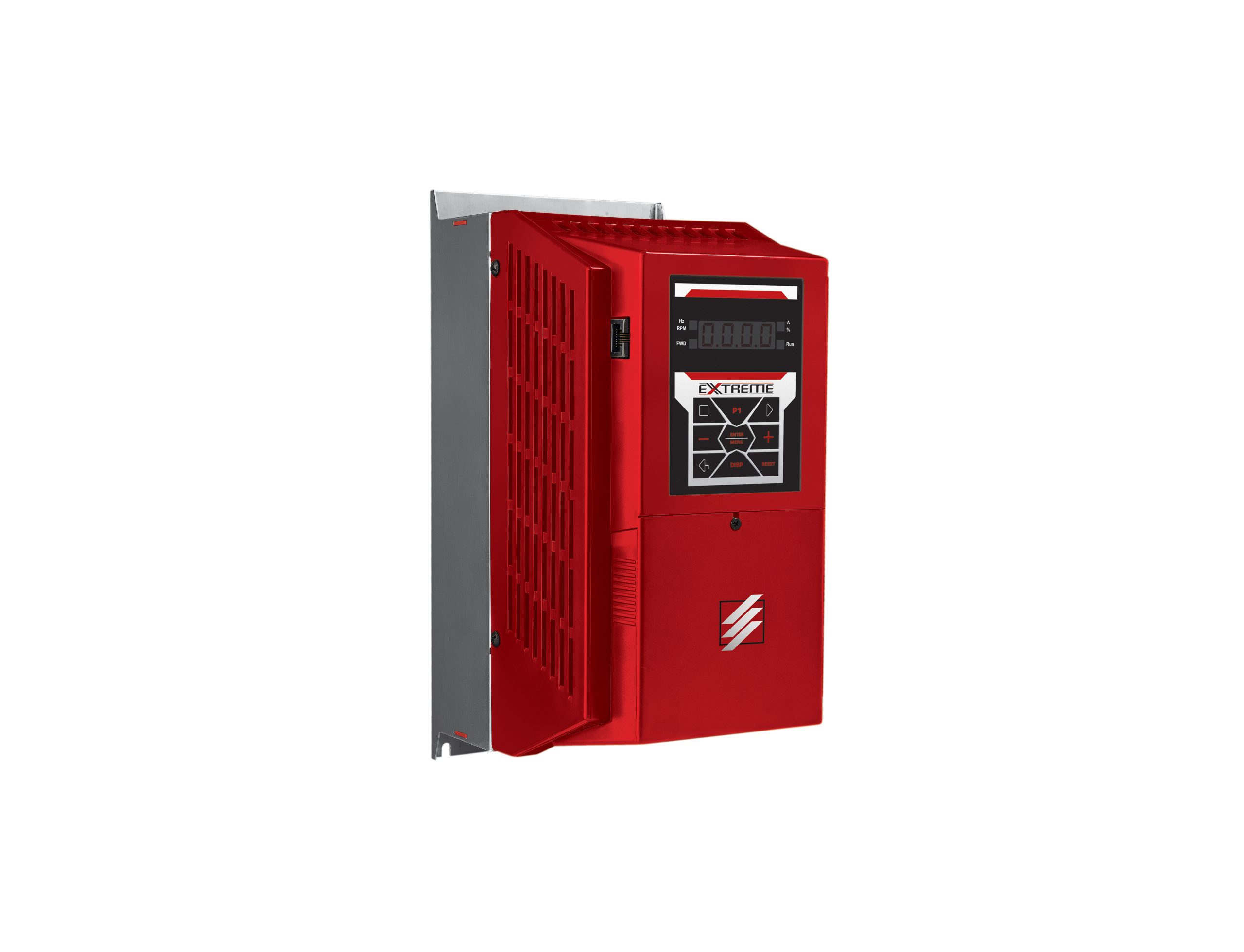
Before the advent of electric drives, there wasn't much enthusiasm for AC machines in the industry. One reason for this was the high inrush current of AC machines (sometimes up to 8 times the rated speed), and another reason was that DC motors offered more control capabilities compared to AC motors. This article explains how, with the emergence of electric drives, the barriers to the use of AC motors were removed. Electric Drive In this article, we aim to provide a brief overview of the reasons behind the emergence of electric drives and the contributions of electric drives to the industry. We will first examine the different types of electric motors and list their advantages and disadvantages. DC motors were the first generation of electric motors, designed to convert electrical energy into mechanical energy. This is achieved with the help of a fixed-field magnet. The name of these motors comes from their use of direct current (DC). A DC motor consists of a stator, rotor winding, current-conducting bars, brushes, and a commutator. These motors are used in various applications, such as toy manufacturing, as well as in robotics, automotive industries, and more. One of the advantages of DC motors is that their torque is easily controllable. Another positive feature is their quick dynamic response to speed changes. However, DC motors, despite all their positive features, also have drawbacks, such as high manufacturing costs and a high need for maintenance. With technological advancements, AC electric motors gained advantages over DC motors, including: 1. Smaller size 2. Higher power 3. Simpler design and more affordable price 4. Greater resistance to shock Before the introduction of electric drives, there was limited use of AC machines in industry. One of the reasons for this was the high inrush current of AC machines (which could be up to 8 times the rated speed), and another reason was that DC motors provided more control capabilities than AC motors. At that time, two-speed AC motors were used. In the construction of two-speed AC motors, there is a winding with smaller thickness for low speed and a winding with greater thickness for high speed. Switching between these two speeds at once causes a large shock to the system, increasing the wear and tear of the system. Additionally, these motors consume high current at startup, which increases the temperature of the system and leads to higher losses. In such cases, the drive is a key solution, as it can continuously and smoothly change the speed of the electric motor within the allowed range, from zero to several times the motor's rated speed, without causing shocks. Drive systems, due to their ability to change voltage and frequency (VVVF), provide benefits such as gradual speed changes and smooth motion, which cannot be achieved with a two-speed system. In fact, the presence of a drive in the system is important for two reasons: AC motors are another type of electric motor that includes two parts: a fixed part (the stator) and a moving part (the rotor). The stator and rotor of AC motors are placed at a specific distance from each other, with a calculated air gap. For AC motors to rotate, the rotor must be placed in a rotating magnetic field. This magnetic field is generated by the stator windings by applying alternating currents to each phase of the stator with a phase difference of 120 degrees. AC motors are used in pumps, blowers, compressors, household electrical appliances, and more.